Sometimes a project ends, you hang it on the wall, and say “it’s done.” But some guitars have stories that don’t just end; they evolve.
In this article, I will share the story of how one of my first projects, “Model Hydrogen” (Superstrat), shed its skin and transformed from a mere musical instrument into a piece of art. This is not just a lutherie story; it is a tale of patience, friendship, and the immense potential hidden inside a slab of Walnut.
If you are ready, let’s dive deep into the art from the dusty shelves of my workshop.
Part 1: The Starting Point (Old Friend “Hydrogen”)
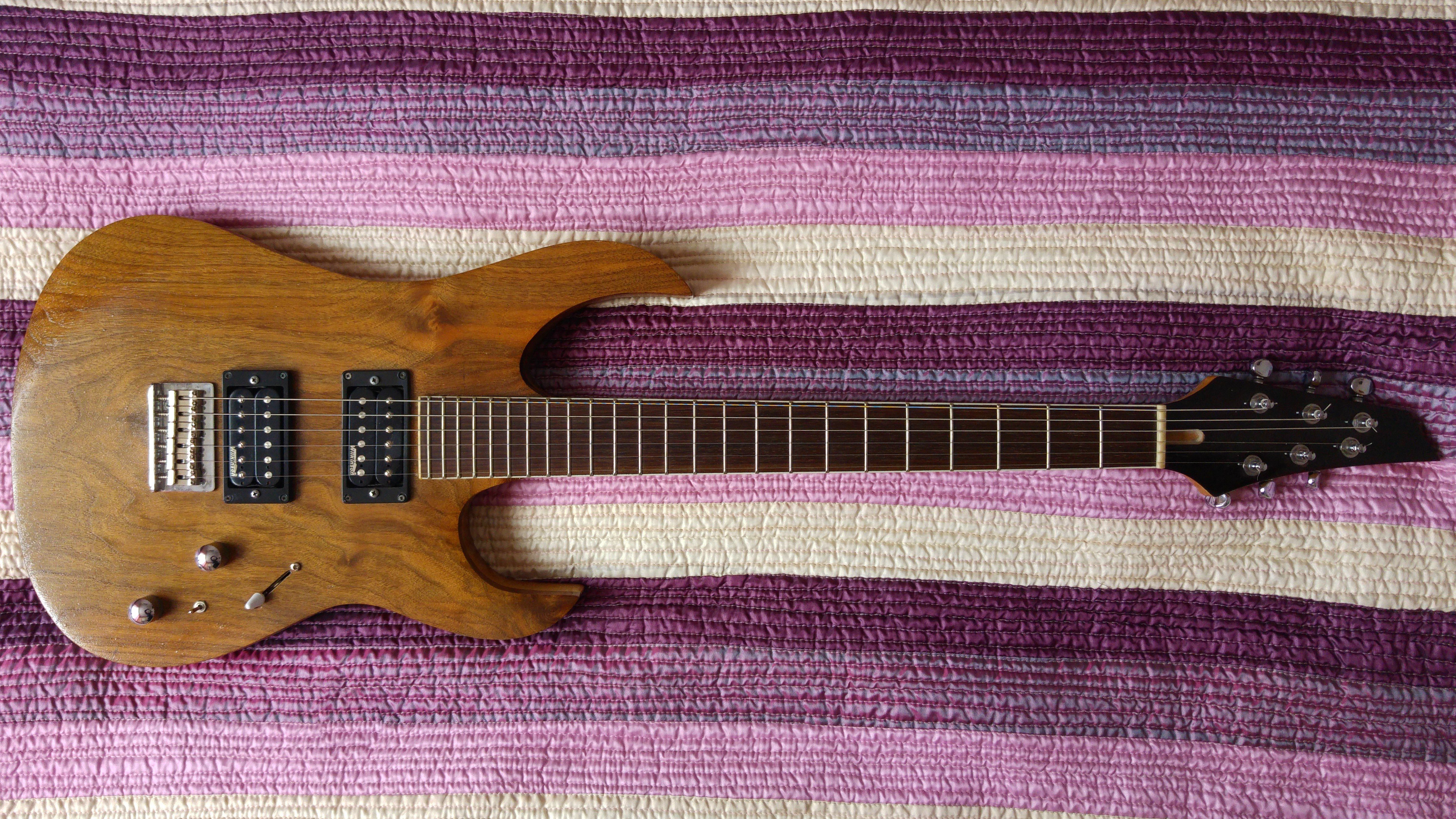
Some of you might remember; “Model Hydrogen” was one of my first serious Superstrat attempts. My goal was to build a modern metal machine that responds well to heavy tones with a comfortable neck. I chose Walnut for the body. Walnut is a wood that provides tight, articulate responses tonally and possesses magnificent grain patterns visually.
The guitar was perfectly functional in its initial state. However, over time, that flat, smooth body started whispering to me: “My potential is greater than this, I can show you more.”
Part 2: The Artist’s Touch (Ramazan Aydin and the Chisel)
This is the breaking point of the story. To reveal the potential within the guitar body, lutherie skills were not enough; we needed “artistry.”
At this point, my dear friend and an artist whose hands shape wood like dough, Ramazan Aydin, stepped in. When I told him about the project, I asked if he could use the guitar body as a canvas. His answer marked the beginning of months of labor.
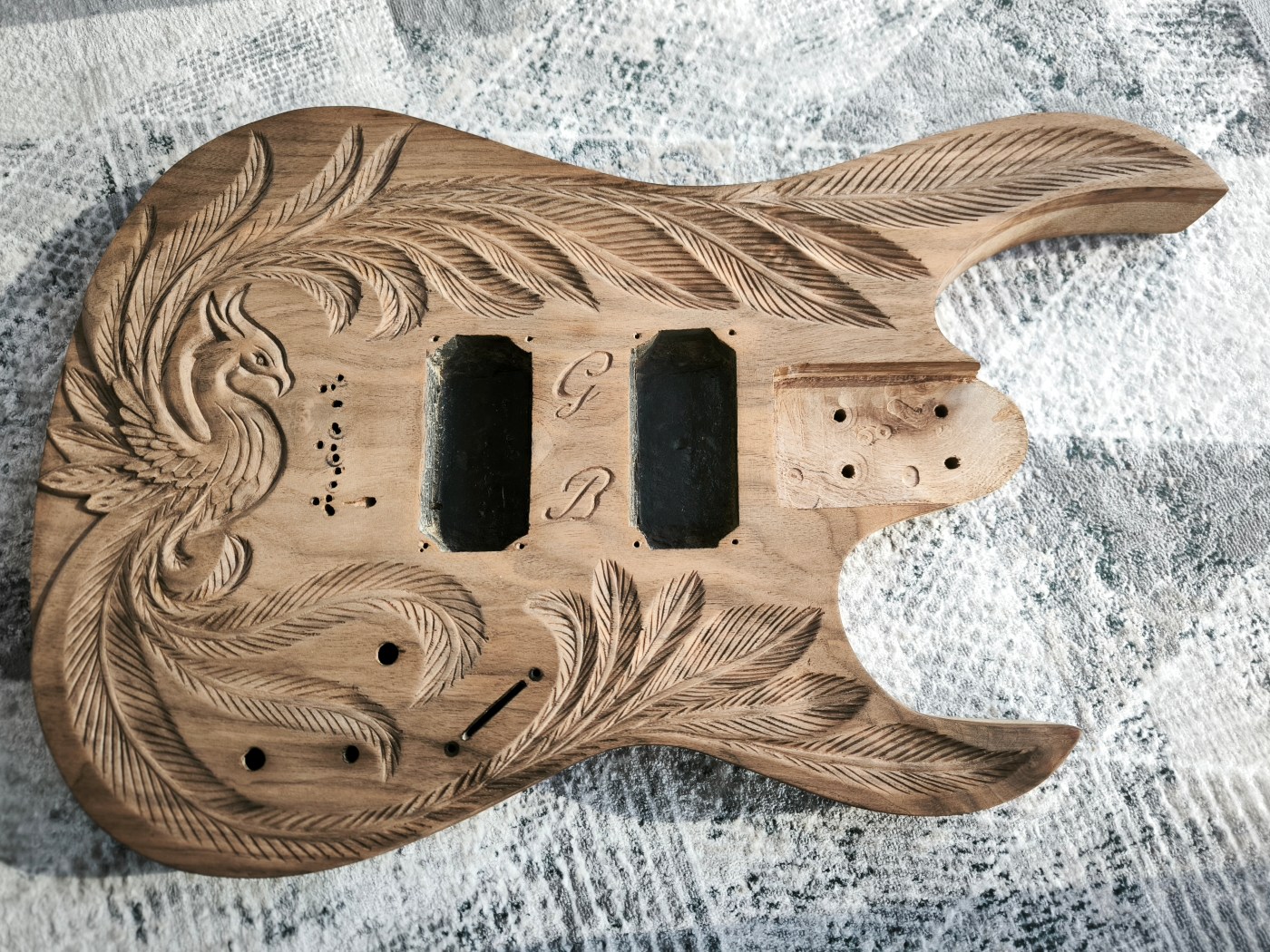
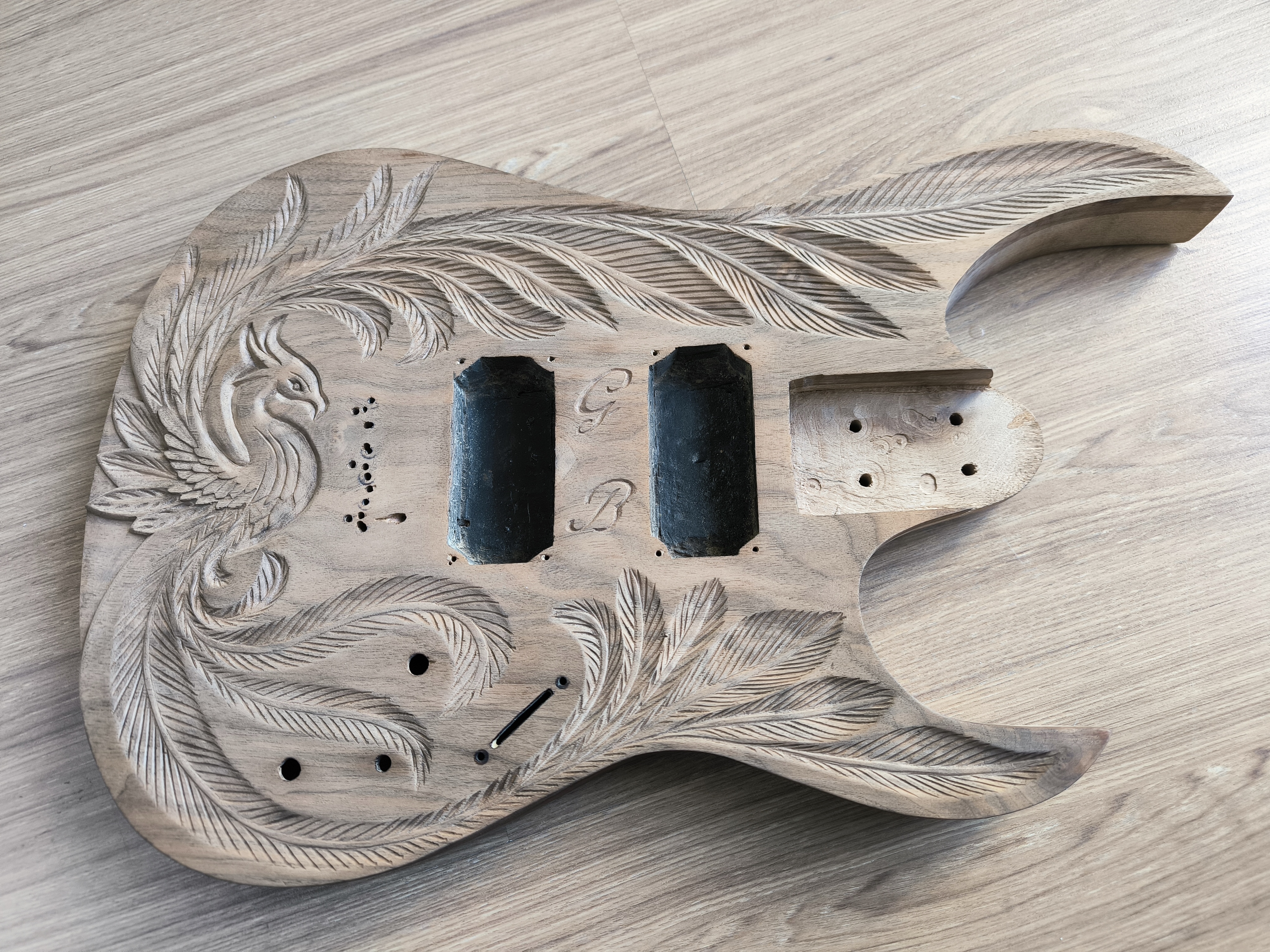
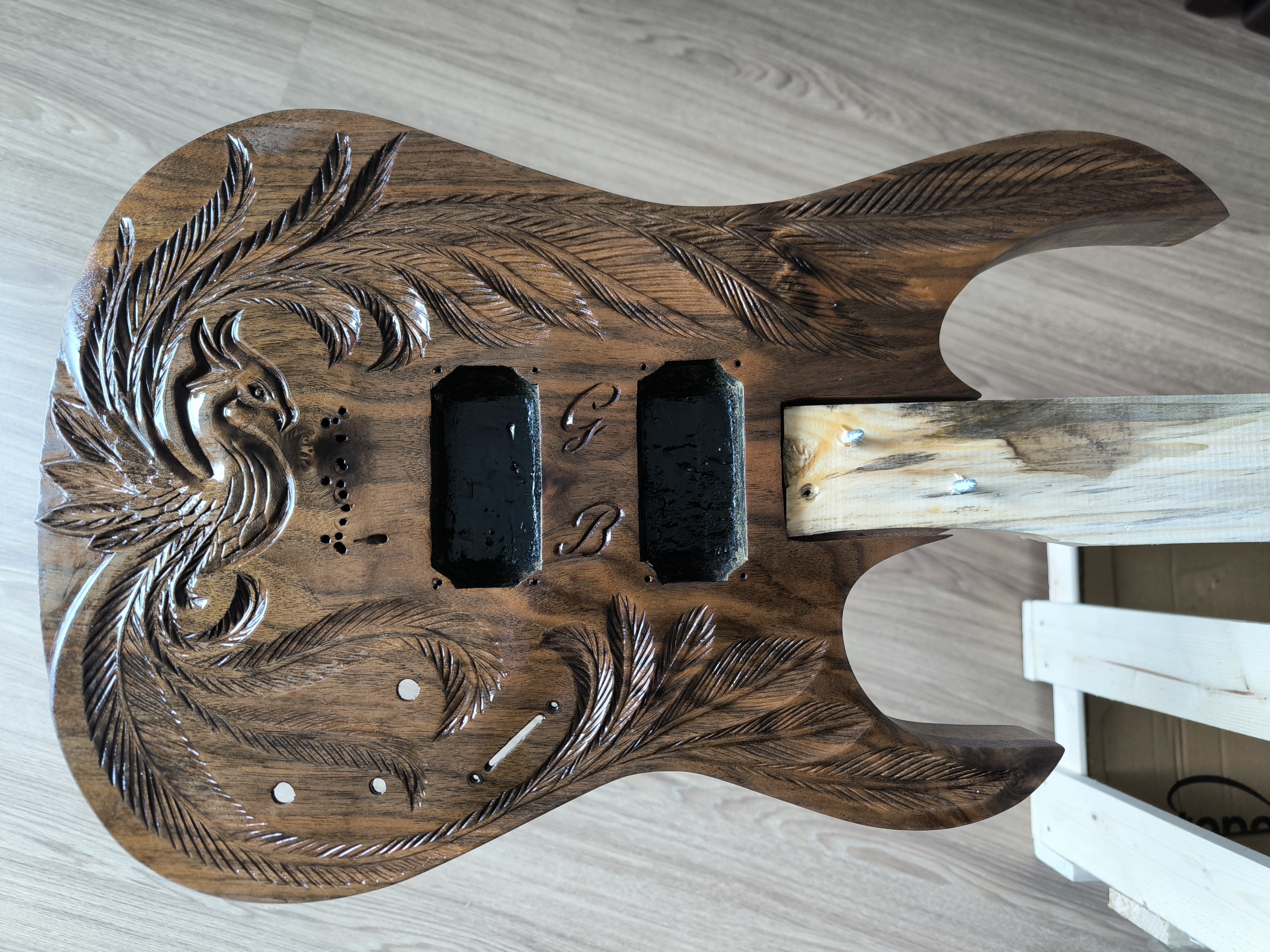
Ramazan gave a new dimension to the walnut wood not with the coldness of CNC machines, but entirely with traditional methods; using chisels, knives, and incredible patience. Watching that hard walnut wood being carved millimeter by millimeter was mesmerizing.
[INSERT VIDEO HERE: Ramazan Aydin carving the body]
During this process, we discussed many technical details, such as how deep we could go without ruining the resonance and how the patterns would fit the ergonomics of the body. The result was beyond our expectations.
Part 3: The Finish and the Awakening of Walnut
When the carving was finished, we had a raw, processed sculpture. But the real magic of walnut wood appears when the first coat of finish hits the surface.
We had no luxury of making mistakes on such labor-intensive carvings. We needed a finish application that wouldn’t fill the depths of the carvings or drown out the details, but would reveal that 3D, shimmering “chatoyancy” of the walnut grain.
I will never forget the moment we applied the first coat. The carvings, which looked matte and pale, suddenly came to life, gained depth, and started screaming “I am here!”
Part 4: Final Assembly and Sound Test
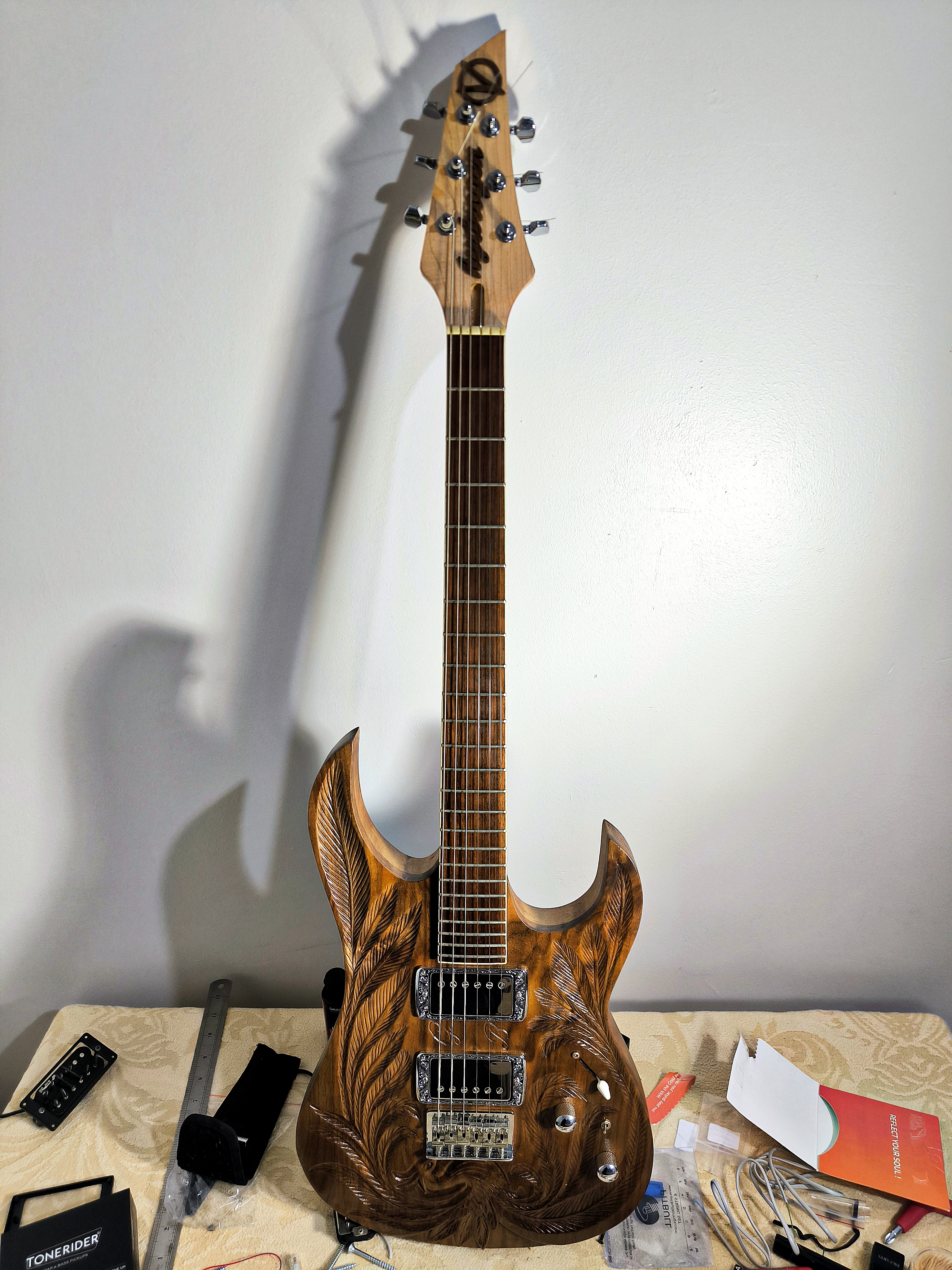
The body was no longer a piece of furniture; it was ready to be an instrument. We moved on to the neck assembly, bridge adjustment, and installing the electronics (pickups) into the carved body.
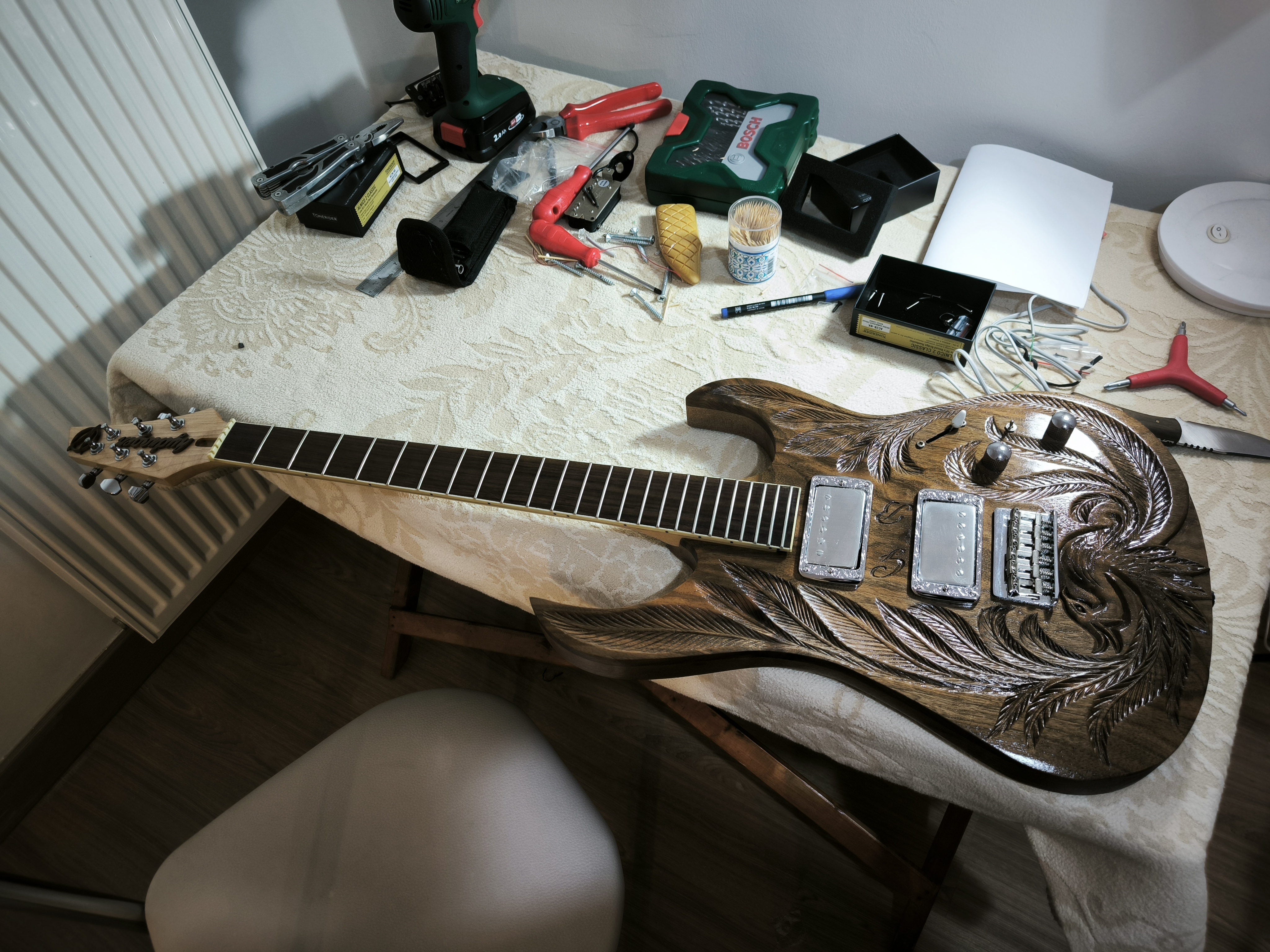
How would such a radical body modification (mass reduction) affect the tone? That was the question we were all wondering.
All parts were assembled, strings were installed, the first tuning was done, and we turned up the amp…
[INSERT VIDEO HERE: Assembly video or detailed shots of the finished guitar]
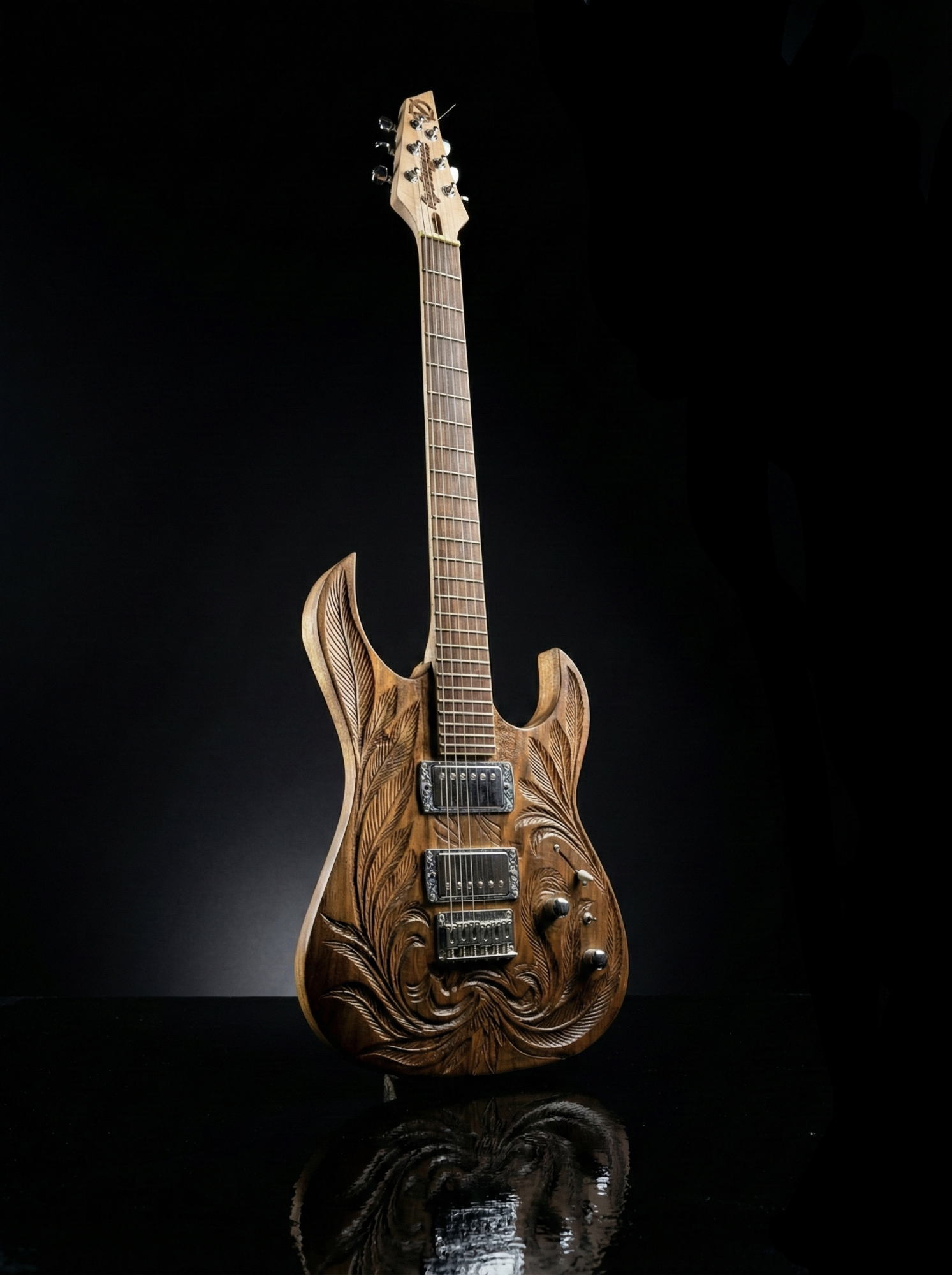
The result? The aggressive yet articulate character of the walnut was still there. In fact, the surface area change created by the carvings seemed to add a more acoustic, “breathier” resonance to the guitar. A monster emerged that says “I am here” on stage with its visuals and backs it up with its tone.
[INSERT VIDEO HERE: Sound/Tone test video with the guitar]
Final Words
This project is a summary of the vision behind Gitar Projeleri: Starting with limited resources, but with the right friendships and effort, you can own a world-class instrument that is completely unique to you.
I would like to thank Ramazan Aydin once again for the hands that created this masterpiece.
What do you think? We are waiting for your comments!
 Gitar Projeleri
Yorum bırakın